What factors affect fence and wall installation prices?
What Factors Affect Fence and Wall Installation Prices?
Installing a fence or wall is an important part of improving a property’s privacy, security, and appearance. Whether you are fencing a villa, garden, commercial building, warehouse, or industrial site, understanding installation costs can help you plan your budget more effectively.
Fence and wall installation prices vary depending on the materials used, the size of the area, the required height, labour costs, and the condition of the ground. In the UAE, weather conditions, design preferences, and local approval requirements can also influence the overall project cost.
In this guide, we explain the main factors that affect fence and wall installation prices and how to choose a suitable solution for your property.
1. Type of Fence or Wall Material
The material is one of the most important factors affecting the total installation price. Different materials have different purchase costs, installation requirements, durability, and maintenance needs.
Common options include:
- Metal fencing: Steel and aluminium fences are popular for residential, commercial, and industrial properties. Prices depend on the metal type, thickness, finish, and design.
- Wooden fencing: Wooden fences provide a natural appearance and privacy. Costs vary according to the wood species, treatment, panel design, and maintenance requirements.
- Concrete walls: Concrete walls provide privacy, strength, and a solid boundary. Their cost depends on the wall thickness, reinforcement, foundation, and construction method.
- Block walls: Concrete block walls are commonly used for property boundaries and security. Labour, block quality, plastering, and finishing can affect the price.
- PVC fencing: PVC fences can be suitable for certain gardens and residential applications. Costs depend on the panel quality, dimensions, and design.
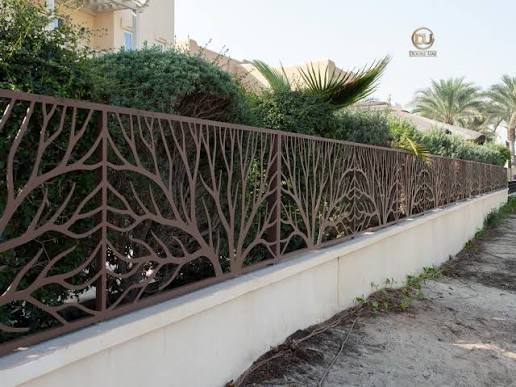
- Decorative fencing: Custom metal patterns, decorative panels, and premium finishes can increase the overall price.
Before choosing a material, consider the initial cost alongside durability, maintenance, privacy, and the appearance you want to achieve.
2. Total Length and Height
The size of the project directly affects how much material and labour are required.
A longer boundary usually requires more fence panels, posts, concrete, fasteners, or wall blocks. A taller fence or wall may also need stronger supports and additional construction work.
For example, a short garden fence will generally require fewer materials than a tall perimeter fence around a commercial warehouse.
When requesting a quotation, provide the contractor with the total boundary length and desired height. Accurate measurements help reduce unexpected material costs and make it easier to compare quotations.
3. Ground Conditions and Site Preparation
The condition of the installation site can significantly affect the price.
Flat, stable ground is generally easier to work with than rocky, uneven, or sloping land. Some sites require additional preparation before installation can begin.
Possible preparation costs include:
- Removing existing fencing or walls.
- Clearing vegetation, debris, or construction waste.
- Levelling uneven ground.
- Excavating post holes or wall foundations.
- Breaking through hard ground or rock.
- Preparing concrete bases and drainage arrangements.
In some UAE locations, difficult soil conditions or restricted access for construction equipment may increase labour and equipment costs.
A site inspection can help identify these requirements before the project starts.
4. Labour and Installation Complexity
Labour costs depend on the type of fence or wall, the installation method, and the experience required.
Installing standard fence panels may be relatively straightforward. Constructing a reinforced concrete wall, installing custom metalwork, or building a fence on uneven ground can require more time and specialized skills.
The following factors may increase labour costs:
- Complex designs or decorative patterns.
- Heavy materials that require lifting equipment.
- Difficult access to the installation area.
- Extensive excavation or foundation work.
- Additional cutting, welding, or finishing.
- Tight project deadlines or unusual working conditions.
When comparing contractors, check whether the quotation includes installation, equipment, finishing, and site cleanup.
5. Design, Style, and Customization
The design of a fence or wall can have a major impact on its price.
A simple boundary fence with standard panels is generally less complicated to install than a customized design featuring decorative metalwork, integrated lighting, or special architectural details.
Popular customization options include:
- Modern horizontal or vertical metal slats.
- Decorative laser-cut panels.
- Stone-textured or patterned wall finishes.
- Privacy screens and combined fence-wall designs.
- Matching gates and entrance features.
- Special colours, coatings, and premium finishes.
For residential properties, a customized design can improve the overall appearance of the exterior. For commercial sites, the priority may be durability, visibility, and access control.
Choosing a design that suits the property’s purpose can help balance appearance and cost.
6. Foundations, Posts, and Structural Requirements
A fence is only as reliable as its supporting structure. Posts, anchors, foundations, and wall reinforcement can affect both the initial cost and long-term stability.
Lightweight fencing may require relatively simple supports, depending on the manufacturer’s specifications and site conditions. Taller fences, heavy gates, and masonry walls may require stronger foundations.
Structural requirements can vary according to:
- Fence or wall height.
- Weight of the materials.
- Soil conditions.
- Wind exposure.
- Gate size and operating mechanism.
- Intended use and local regulations.
In the UAE, wind exposure is particularly important for large, solid panels that can catch the wind. The supporting structure should be designed for the relevant site conditions rather than selected on price alone.
7. Gates, Doors, and Security Features
If your project includes a gate or controlled entrance, its cost may be separate from the basic fence or wall installation.
A simple pedestrian gate will usually have different requirements from a wide vehicle entrance or an automated sliding gate.
Additional features may include:
- Pedestrian and vehicle gates.
- Electric gate motors.
- Access control systems.
- Intercoms and security cameras.
- Locks and reinforced hinges.
- Anti-climb features where appropriate.
The size, weight, material, and automation system of the gate can increase the total project cost. Ask the contractor to list these items separately so you can understand their contribution to the quotation.
8. Weather Resistance and Protective Finishes
Outdoor fences and walls must withstand local environmental conditions. In the UAE, intense sunlight, high temperatures, dust, and humidity in coastal areas can affect material performance.
Some materials require protective treatments or finishes to improve their resistance to environmental exposure.
For example, metal fencing may need galvanizing or a suitable protective coating to reduce corrosion. Wooden fencing may require appropriate treatment to protect it from moisture, insects, and weathering. Concrete and masonry walls may need suitable finishes and attention to cracking or water penetration.
Higher-quality finishes can increase the initial price but may reduce maintenance requirements over time.
The best option depends on the material, the property’s location, and the expected service life.
9. Local Permits and Approval Requirements
Depending on the property, location, fence height, wall design, and type of work, approvals may be required before installation.
Requirements can differ between UAE emirates, municipalities, free zones, and development communities. Some locations may have restrictions relating to boundary placement, height, appearance, or the use of particular materials.
Before starting work, check whether the project requires permission, drawings, engineering documentation, or approval from the relevant authority or property management.
Allowing for these requirements in the budget can help prevent delays and unexpected expenses.
10. Removal, Finishing, and Additional Work
The advertised installation price may not include every task needed to complete the project.
Depending on the contractor’s quotation, additional costs may arise from:
- Demolition and disposal of an old wall or fence.
- Transportation and delivery of materials.
- Concrete foundations and curing time.
- Plastering, painting, or decorative finishing.
- Landscaping repairs after installation.
- Drainage improvements.
- Site cleanup and waste removal.
Ask for an itemized quotation that explains what is included and what may be charged separately.
11. Maintenance and Long-Term Costs
The cheapest installation is not always the most economical option over time. Some materials require more frequent painting, treatment, repairs, or replacement than others.
For example, the maintenance needs of a wooden fence can differ from those of a properly coated metal fence or a concrete wall.
When comparing options, consider:
- Expected service life.
- Cleaning and maintenance requirements.
- Availability of replacement parts.
- Repair costs.
- Warranty coverage.
- Resistance to the local climate.
A durable material with an appropriate protective finish may provide better long-term value, even if its initial installation cost is higher.
How to Get an Accurate Fence or Wall Installation Quote
To receive a useful quotation, provide the contractor with clear project details.
- Measure the total boundary length.
- Specify the required fence or wall height.
- Choose a preferred material and design.
- Explain whether you need gates or security features.
- Share any known site-access or ground-condition issues.
- Confirm whether old structures need to be removed.
- Ask about permits, foundations, finishes, and warranties.
Request itemized quotations from multiple qualified contractors and compare the same specifications. This makes it easier to identify differences in materials, labour, and additional charges.
Frequently Asked Questions
What is the biggest factor affecting fence installation prices?
Material choice and total fence size are often major cost factors. However, ground conditions, labour, foundations, customization, and gates can also have a significant effect.
Is a wall more expensive than a fence?
A solid concrete or block wall can cost more than a basic fence because it may require excavation, foundations, masonry work, reinforcement, plastering, and painting. The actual cost depends on the materials and design being compared.
Does fence height affect installation costs?
Yes. Taller fences generally require more material and may need stronger posts, foundations, and additional structural support.
Do I need approval to install a boundary wall in the UAE?
Approval requirements depend on the property’s location, design, height, and applicable local regulations. Check with the relevant municipality, development authority, or property management before starting installation.
How can I reduce fence and wall installation costs?
Choose a practical design, provide accurate measurements, compare itemized quotations, and avoid unnecessary customization. Selecting durable materials suited to the local climate can also help reduce future maintenance costs.
Are metal fences suitable for the UAE climate?
Metal fences can be suitable when the metal type, protective coating, fixings, and installation are selected for the local conditions. Coastal environments may require particular attention to corrosion resistance.
Conclusion
Fence and wall installation prices depend on several connected factors, including material selection, length, height, ground conditions, labour, structural requirements, design, and finishing.
For property owners in the UAE, weather resistance and local approval requirements are also important considerations. By assessing these factors before installation, you can plan a realistic budget and choose a fence or wall that meets your security, privacy, and appearance requirements.
The best approach is to compare detailed quotations based on the same measurements and specifications. This helps you understand the full project cost and choose a solution that offers suitable quality, durability, and long-term value.